Episode Transcript
[00:00:00] Speaker A: When I started making content on social media, one of the things that I didn't expect to happen was being able to meet people around the country and build relationships and have conversations with them and create friendships. And it's something that I cherish and am very humbled by being able to experience.
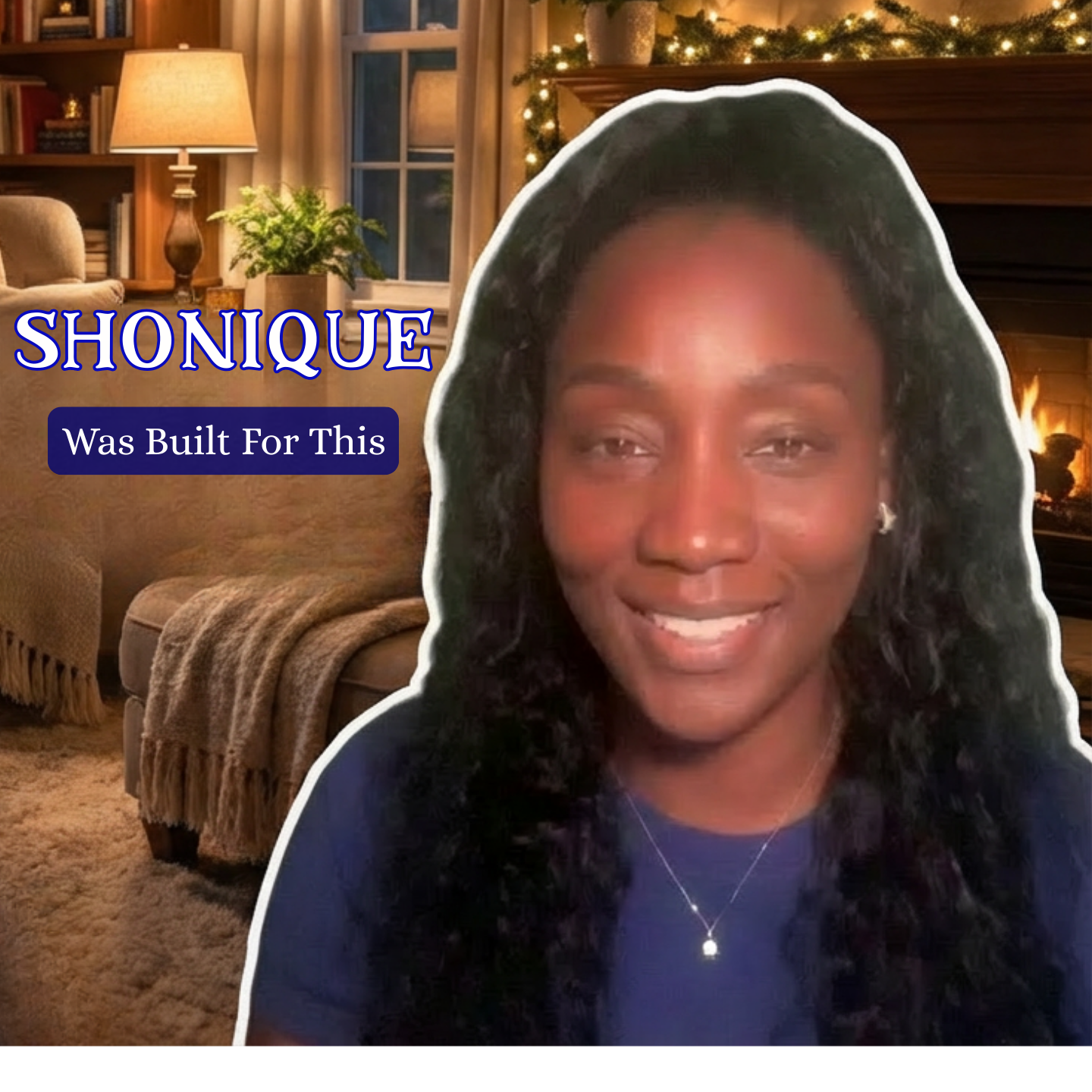
And today, I'm going to share with you one of my new relationships, one of my new friendships that I have made with someone who is from a completely different world than I am.
She lives on the West Coast. I live here in the Midwest. She's in her mid-30s. I'm 62 years old.
She's a black woman. I'm an old white dude. So we couldn't be any more different.
But today, we're going to show you that we are more alike, and all of us are more alike than any of us could ever imagine. I invited her to join me on my podcast because she has something to say.
My name is Kurt Mullet. I'm Hoosier Blue, and I have something to say. Let's get at it.
All right.
Shanique Williams?
[00:01:16] Speaker B: Yes, sir.
[00:01:17] Speaker A: From Riverside, California, right?
[00:01:20] Speaker B: Yes. I was born in Riverside, California. I am now within Los Angeles County.
[00:01:25] Speaker A: Well, I just want to tell you I'm thrilled to have you join me today and have this conversation. We were hooked up by a mutual friend.
And just to share with everybody, last week, I think it was Tuesday night, we had a phone call together, and we talked for over two and a half hours. You and I had never spoke to each other. We've never met. I probably would have never had an opportunity to meet you if it hadn't been for Jen, and I'm grateful for her to put us together. So what got you to the point that you are here today? Why are you doing this today? What occurred in your life that brought you to this moment?
[00:02:04] Speaker B: Yes. So, for one, just thank you for opening up your platform, your space, inviting me in. Kurt, as you said, you know, us being from two completely different parts of America, two completely different backgrounds, we probably would have never met outside of events and circumstances. Right. But as I shared with you, there's no such thing as coincidence. Right? This was all divine plan and timing know my name is Shonique Williams. I am running for Congress in California's 41st congressional district. And as Kurt shared, Jen connected us. Unfortunately, due to some of the media and attention that she has seen surrounding my. My. My race right here for Congress regarding the arrest and the brutality I. I've experienced. We'll get into that later.
But what brought me to this point, there's so many things, right? And we don't have enough time to get into them. But I'll just say right from the very beginning, what brought me here is because I was literally built for this from the very beginning. I make it very known to people, being a black person in America, the odds were already stacked against me. From my mother's womb. It was already dictated and determined by America that I was not worthy. I was less than. I was insignificant. And at one point in time, black people, we weren't even seen as people. We were seen as property. And a lot of people, due to guilt, fear, shame, they want to hide that truth and that reality of what black Americans experienced in the past and what we are currently experiencing right now. All of that brought me to this point because running for Congress, for me, means bringing voice, bringing light, bringing advocacy to those of us that are underrepresented.
That includes black, that includes brown, that includes marginalized people.
And unless you have experienced the hurts, the harms and the dangers that we have experienced, you really cannot be in a position of power and advocate for us, because sympathy and empathy is not the same thing.
So again, I could tell you a million different stories throughout my young 34 years of life that brought me to this moment. I'll say that what let me know that I was an advocate. Right? When I was eight years old, one of my favorite uncles was sentenced to 81 years to life under the three strikes law. Some of you known that as the 1994 crime bill.
Ultimately, what that bill truly was about was racism. That was racism targeted at the black community. There's not a way to clean it up. Some elected officials have stepped in and apologized for the harms and the dangers that was inflicted upon black people at that time, because we were being termed things such as super predator and monster and animal and criminal and all of these terms. And it was being told to America that in order to clean America up and make America safe, that you had to, you know, imprison jail and ultimately enslave black people. We were the problem. We were the plague. And that was the only way America was going to be safe. And that ideology, right, which is white supremacist ideology, it has been in America since the very beginning of time when slaves were brought here against our will, you know, on the ships and the boats that we were. It's been here. It's not new. But again, due to guilt, shame and all of these things, people have tried to eradicate that truth in that reality.
So with that being what first brought me to realizing advocacy was necessary. Because how do you give someone 81 years to life for robbery? Right? Understand a crime was committed. However, there was no victims on the scene of any of these robberies. There was no life in imminent danger. There was no murder involved. There was no rape involved. Right? The things that America and society says are the most heinous acts. Those, Those crimes weren't committed. Again, I understand a crime was committed, but 81 years to life for robbing stores that were closed?
[00:06:05] Speaker A: That's. That's asinine. And you know damn well, and I know damn well that if that was a white dude, there would be a high percentage chance that he wouldn't have even seen jail time, probably a fine and some probation, but he wouldn't most definitely would not have seen 81 fucking years. I'm sorry, but that's just crazy. But these are the stories that, you know, people aren't aware of.
They just don't understand.
When I hear people talk about our country's not racist or we're, you know, bullshit, that we've been a racist country ever since white dudes stepped this land, okay?
It drives me crazy.
And, you know, I'm a white guy, so I can't relate to so many of the things that, you know, friends of mine have shared with me that they've experienced through their life.
And you're another one.
[00:07:10] Speaker B: Yes. So I'll go from again, that event at 8 years old with my uncle. That's what let me know that I was an advocate. Because even at eight years old, I understood that that was injustice. Didn't fully know what injustice meant as a word at 8 years old, but I knew that was injustice and I knew that made no sense. So I determined at 8 years old, I was going to be an attorney. Right. I believed it was going to be criminal defense at that time.
[00:07:33] Speaker A: And that's amazing.
[00:07:34] Speaker B: Yeah, that's amazing. Fast forward. Life events took place due to systematic oppressions, barriers, lack of mental health education, knowledge, things like that. I was a child of child abuse in every single form. Physically, mentally, emotionally, sexually.
Situations led me to foster care. And while in foster care now I was responsible as a child for undoing the harm that happened to me as a child at the hands of my parents, you know, my guardians, at the hands of society. As a child, I was responsible for undoing that harm. Of course, I didn't know how to tactfully do that, didn't have the knowledge, the education, the emotional intelligence. So I reacted with trauma you know, with my trauma, I was reacting very angry, you know, very upset, you know, responding physically when met with harm.
And that, again, ultimately led me from being in foster homes to group homes. And it was, it was a lot of people that failed me along the way. Right? But more than anyone, I made it my decision that I was gonna hold social workers and judges responsible. Because you came into a child's life that experienced child abuse, and rightfully so. Because I did need to be removed from my mother. I was experiencing child abuse at the hands of her and my stepfather. I needed to be removed. But see, America, the government came in and removed me and put me in foster care, only to abuse me as well. And that's a conversation for a whole nother day and a whole nother time. So with that being said, When I turned 18 years old, I was born in 1991, 34 years old.
There was not a program and systems in place to protect foster children when we aged out of foster care. So when we turned 18 and foster parents and group homeowners stopped receiving checks for us, they stopped receiving financial aid from us, from the government, from the state, particularly here in California, it was goodbye, fuck you, you didn't get any assistance. Society already said, wait, you came from an unstable background. There's child abuse here so significant that we have to remove from the custody, from the care of your family, and we have to make you a ward of the state. But the moment you turn 18, we're going to throw you out there into society. Right? That's why statistics for foster youth, former foster youth in the homeless population, is so high. Because we do not have support, society snatches us up and then throws us right out there to the wolves as soon as they stop receiving a check for us. Again, conversation for another time. But this is important to my story because now, the first time I became homeless on my own, because I was homeless several times as a minor with my family, but on my own, I was 15 years old.
I was sleeping in a park in the city of Marino Valley, California, because my mother brought my abuser, which is, which was her husband, my stepfather, back into the home. There was a lot into the case in the story regarding my child abuse. He was on the run and she brought him back into the home. So out of concerns for my safety, some other things that were happening, I left and I was homeless. I had nowhere to go. I didn't know who to call. All my friends were teenagers. We were kids.
I found myself again sleeping in this park. And I'm five foot tall.
that time, I was probably only maybe 110 pounds. And so I would sleep in fetal position at the top of a slide. I didn't have a blanket, didn't have socks. I was wearing a tank top, a white tank top and some black basketball shorts with stripes on the sides. To this day, I remember what I was wearing. And I slept curled up in fetal position at the top of the slide. You know how slides have like this little house looking thing at the top? That's how I slept.
That's how I slept at 15 years old. And then I would wake up in the daytime. One of my friends was dating a young man that lived, you know, a block away from the park while his mom was at work. He was only 18, 19 himself. So while his mom was at work, he would let me come over, wear one of his T shirts. He would wash my outfit for me because that was the only clothes I had. He would wash my outfit for me and then he would give me whatever food was in the house that he thought his mom wouldn't recognize was gone. That's how I was living at 15 years old. Another child was trying to help him protect me. He was a child. He was 18, 19, but he was a child. That was my life. And that's how I was living. Because I didn't want to remain in the home with the abuse anymore, didn't want to tell the social workers. My mom let the abuser back into the house. So this set me up into this crazy whirlwind of just constantly feeling like I gotta defend myself, I gotta protect myself, right? So when I turned 18 and the system said F you, by this time I had already, you know, began to do a lot of what I believed to be recovery for myself. I started taking classes at the community college at 16 years old. I was always intelligent, always received students on a roll, principals, honor rolls. I was always a smart child, but I was an abused child. Education was my way out. So once some teachers saw that in me as again, in every grade I was in. But in high school, there was a teacher, independent studies teacher. He recommended I join this gateway to college program at Riverside Community College.
And to be quite honest, even though I had said at eight years old, I had determined I was going to be an attorney. I didn't know the route to be an attorney. I didn't know what that looked like. There was no attorneys in my family. There was, you know, no one in my family that had pursued a college degree at that time. So when this Teacher encouraged me to do that. I did it, But I didn't really know what that looked like. So before I knew it, I became this poster child. Literally a poster child. I was in all these pamphlets and getting all these awards and congratulations all the time from Riverside Community College, which was known as RCC from my high school for all these things, right?
It became apparent to the people that began to care about me, the support system that was building. Wait a minute. Yes, Shonique's angry, but she's angry due to the harms and the abuses that are happening to her. So I had to advocate for myself to not be in regular high school. I needed to be in independent studies. Because one of the reasons I fought so much at school is because while I was a foster child, I wasn't being provided with adequate clothing. So I was wearing the same two to three outfits to school every single day. Kids being ignorant kids, they were attempting to bully me. And I wasn't tolerating the abuse and the bullying. So that was resulting in physical fights of me standing up and protecting myself. So I told the judge in my court one day, I said, listen, if you guys want me to stop fighting, stop sending me to school five days a week. And I only have two or three outfits to wear because the kids are talking about me. They don't know that you guys are the ones responsible for giving me money for clothes, and you're not doing it. That judge ended up giving me a $200 emergency voucher, but I didn't receive it until months later. So in the meantime, listen. So in the meantime, the decision I realized, I advocated, I looked up for myself. I didn't understand how independent studies.
I found a school that had independent studies where I only had to go to school for one hour, one time a week. And to me it's like, well, ding dong. Like this makes sense. If you're not gonna give me clothes and I'm gonna keep getting bullied for wearing the same clothes to school. The problem isn't my education. I didn't disrespect teachers. I didn't disrespect adults. I was defending myself against bullies because of wearing the same clothes to school. Put me in school less. You don't wanna give me money for clothes, Put me in school less. And at this time, I still didn't even realize this was advocacy that I was doing for myself. I didn't know. I just knew that this was an injustice. I wasn't studying for it, you know, so this all is a Lot, right. But these, these things were all shaping me to be this advocate. I had, you know, worked at McDonald's as starting at 16.
I had to advocate for myself for that. That's a story for another time. Foster care didn't even want me to have a job. I was told that I needed to quit my job because the group home that I lived at didn't have the ability to transport me to school. Cause, mind you, I was going to that independent studies once a week. I was taking classes at the community college. A full time College student at 16 years old with a 4.0 GPA in high school and in college, the group home complained that my schedule, because of course, college classes, right. That my schedule was inconvenient for the route that they needed to take to drop the other young women off to school and pick them up. Instead of being proud of the fact that I found a way out for myself and I was, you know, channeling these, these traumas I experienced into my education. It was the system, the group home and foster care was trying to stop that. So of course I didn't accept that. Right. I wouldn't be sitting here today. So I said, well, you know what? I'm just gonna start taking myself to work in school. So I would run away. I was literally getting labeled as a runaway because I would leave to go get on the city bus to take myself to school and take myself to work. So I was getting termed as a runaway every single day.
Not because I was partying or running wild, but just simply going to school and going to work. Keep in mind, at some point I was already taking care of myself. Now I was buying myself my own hair products, my own hygiene products, my own clothes, everything. The government was supposed to pay for me for that. They were not. I'm using my checks from work to do this for myself. But the government is paying these group homes in these foster homes to take care of me. But none of it was coming to me. So I say that to say by the time I turn 18, I found myself homeless again.
And it was, it was a lot that went into the story and the situation.
People keep telling me to write a book, but I found myself homeless again.
And with that, there, there were book hell.
[00:17:30] Speaker A: You need to make a movie.
I mean, so much, you know, what you've shared so far would tear down almost every individual out there. People. I mean, it's utterly amazing to me the strength that you have in position possess, it's, it's unreal. You're. You're you're unhuman, like almost. I mean, with what you persevered through. I told you the other night, man, I'm just, I'm lost for words. I could sit and listen to you for hours and it, and everything you say, every time you make a comment, it's like, oh my God, so much. What else?
[00:18:08] Speaker B: I'm a jump in.
[00:18:09] Speaker A: We haven't even scratched the surface.
[00:18:12] Speaker B: But I want to say jump in and say, because I'm a mental health advocate, I'm not this superhuman.
I have found myself battling on the side of mental health, right?
At one point of the story that I Left out that 15 year old girl previous to going and sleeping in that park, I did battle with mental health and I did attempt suicide. I did intentionally overdose on pills. Right.
I've never shared that story in a space such as this. But that's important for people to know because I don't want anyone to think that whatever struggle they're going through in life, that that's the end. Because see, at 15 years old, I did think that was the end. I thought there was no way out for me. I thought that I was never gonna be removed from the hands of my abusers. And thankfully, you know, thankfully my suicide attempt did not work and I'm able to still be here on today. But I, I, I, I did go through a lot, right? And it did all help shape me into who I am on today. But no matter what, like, it's not a superhuman story. I'm human. I'm very, very human.
[00:19:17] Speaker A: I'm actually, and I didn't say that comment to take away from the, and I know you know that, I know you know that, but I just want to say that that comment that I made is just the amazement that you were able to survive all of that. And I know, well, I don't, I can't, I'm not going to lie to you. I can't relate to what the hell you went through. Nobody can. Are there many kids and people that experience the same thing you did and do? Absolutely. And that's the unfortunate thing, but it is amazing that you were able to survive all of that. No matter how low you became at times, you know, you're sitting here today
[00:20:04] Speaker B: just, yeah, I know where your sentiments came from. I just want to share with the people that are watching that there were dark times.
You get to hear testimony on today and get to see the journey on today. But please know there were dark times back then. Now I have strength, right? I've gone to therapy for years. And I know how to speak up and advocate and I know where my help comes from. I know where to receive help and services if there's ever a decline in my mental health. And again, that's a conversation for another time. Some people don't know where that help comes from. So when they are battling with the difficulties, the systematic barriers, mental health, they don't know how to, you know, pull on those tools and resources. So I just want people to know, even someone strong like me did battle. I did battle.
[00:20:51] Speaker A: So, you know, well, your battle will never be over.
Your battle will never be over.
[00:20:56] Speaker B: Right?
[00:20:56] Speaker A: Being a black woman in America, your battle will never be over. Unfortunately. It's just that people just don't understand or know the battle that you faced with your entire life. And that's what's wrong about our country. It's just like you talking about the homelessness.
People want to label homeless people as just lazy and they don't want to fucking work. And that's just so far from the truth. And it's just ignorant for people to say things like that.
And it's said all the time and it drives me crazy, you know. Well, California has the biggest homeless problem. Well, California, what's the population? I mean, God damn.
[00:21:35] Speaker B: But you also heard my story. What commonly happens to foster children in California? Yeah, we're thrown to the street. We're thrown to the street.
[00:21:42] Speaker A: How many homeless people in our country come from foster care?
You know, what's the percentage that would be. Or come from families who had drug addicted parents or, you know, I mean, let's eliminate all those. And then the percentage of those lazy fuckers that don't want to work is probably the smallest amount there. So can you imagine, I'm sorry, can
[00:22:04] Speaker B: you imagine being 18, 19 years old with no family support, no money, no job, no resources? Hopefully you've just graduated high school. Right? But you have nothing. You have nothing. You don't have family to run to. How many of us in our 20s, 30s, 40s, you know, have to sometimes return home to our family because times got hard? So imagine someone that has none of that, none of Shanique.
[00:22:29] Speaker A: I can't. I can't relate to that because I'm white. I'm privileged.
So.
[00:22:35] Speaker B: But see, that's you being honest. Society's not able to be honest. Society looks at it as like, like you said, oh, you know, people are lazy, they don't want to work. And it's like, well, are we not going to talk about the fact there's not jobs available? Readily available. And the jobs that are there, people that have bachelor's and master's degrees are having to go pursue jobs for people that, you know, for. For experience, meant to be for someone that was still in high school or only with a high school education because of the fact that there's not jobs available, you know, for their bachelor's degree, their master's degree. You know, that's a whole thing with the educational system. People do pursue higher education, but they oftentimes can't find work in that. So then they find themselves back at jobs like Amazon warehouses in McDonald's because they cannot find a job in their field.
[00:23:25] Speaker A: Do you know that Indiana's governor just passed a law to where they are taking every degree away from college? And you universities in the state where your starting income is not at least $35,000, they just pass that into law.
So how much do social workers make? I mean, that's just the dumbest.
But it's the control. But he has taken control of the universities here in the state and the funding through them. So he's basically dictating whatever he wants to.
[00:24:00] Speaker B: You know why he did that? Outside of his white privilege, white ideology. And again, it doesn't matter if he's not white in color. I don't know what color the governor of Indiana is.
[00:24:08] Speaker A: No, he's white. Mike Brun.
[00:24:09] Speaker B: Yeah.
The point is he did it because it doesn't impact him, his kids, his family, due to his privilege, due to his power, his status, his money, his corruption, his greed. Him and his family will never see the other side of that experience. And that's why I always advocate that in elected positions we have to have real representation. Right. Just like what Trump said here, saying that he was going to remove certain services and support and student loan forgiveness for certain degrees. It comes from their power, their ignorance, their greed. But, but. And I won't even say lack of understanding, because, yes, it's a lack of understanding, but at the same time, they just really honestly don't care because it doesn't impact them and it doesn't impact those close to them.
[00:25:03] Speaker A: Well, and the thing you didn't mention is their racism.
[00:25:06] Speaker B: I didn't have to say racism because that's obvious when you.
[00:25:11] Speaker A: It's not to a lot of people.
It's not to a lot of people. They don't even think that's part of the equation platform. I don't even think that's.
[00:25:19] Speaker B: No, we're going to be honest. They do realize it. It doesn't matter if they don't want to term it as that. They realize it. They refuse to. Yeah, they know. Racists know that they're racist. Right? The Trump supporters, the maga, all of that. Even if we don't get too heavy into politics and on this portion of the podcast, they know. We have to stop saying that they're ignorant. We have to stop saying that they do not know. Right. Ignorance just means you do not know. They know. They genuinely do not care. It has gone unchecked, it has gone without a lack of accountability. They know. They just genuinely.
[00:25:53] Speaker A: Nobody's ever said that. Nobody has ever said that to me. And now I understand where you're coming from. So I need to quit saying that they don't know that they're racist.
[00:26:03] Speaker B: Yes, they do.
[00:26:04] Speaker A: That they acknowledge that they're racist. And it's just. They accept it and they will never admit it, but they know that they are. So thanks for that, I appreciate it.
[00:26:13] Speaker B: And they admit it. They just don't admit it in the rooms of certain people.
[00:26:16] Speaker A: See, well, yeah, yeah, yeah.
[00:26:18] Speaker B: They probably won't admit it to you even though you're an older white man. They probably won't admit it to you because you won't accept it. You won't.
[00:26:25] Speaker A: I'll speak, yeah, I'll speak that up.
[00:26:27] Speaker B: But to someone else, even if the person they're speaking to isn't themselves. Open racist. If someone else sits in silence, right? Sits in complicity, they're going to say it to that person.
They're gonna say to that person.
[00:26:41] Speaker A: Yeah.
[00:26:42] Speaker B: So they admit it.
Yeah.
[00:26:45] Speaker A: Yeah, you're right. They just don't admit it to. Yeah, you're right.
[00:26:49] Speaker B: Evil.
[00:26:50] Speaker A: See, I never thought that a 34 year old black woman from Riverside, California was going to teach me something, but hey, I'm learning a lot today, so thank you.
[00:27:02] Speaker B: One of the things we'll say to black. You're going to learn something today, okay?
[00:27:07] Speaker A: I hope so. I hope everybody does. That's what I love about you. So, yeah, so.
God, we haven't even scratched the surface.
I mean, this is crazy. So book, please continue.
[00:27:20] Speaker B: Yes. So, you know, even with all of that, and as you know, Kurt knows I've shared so much with him, there's so many pieces I'm leaving out due to the limited time, but ultimately my experience.
[00:27:31] Speaker A: Let's not worry about that. If we don't get everything covered today that we want to. You want to cover, right? Hey, we'll do this again, you know, throw our plans out the window, okay? Just fucking talk about whatever you Want to talk about? Share with us what you want to share with us, and we'll take it from there. So don't worry about that because I'm sure people are sitting here just glued.
[00:27:54] Speaker B: Right.
[00:27:55] Speaker A: Hopefully listening to you. Yeah, I mean, that's the attention you got from me when I was on the phone the other day. I was just, wow.
Anyway, please go ahead.
[00:28:06] Speaker B: Yeah. When I aged out of foster care, what I found again was myself homeless again. Right. So with that, I found myself trying to survive. Right. I was trying to survive. And one of the ways and the formats in which that occurred was I found myself in a relationship with a childhood friend. His mother and my mother knew each other as teenagers before they even had children.
Him and I began dating, and he had his traumas that he brought into the relationship. I had my traumas that I brought into the relationship. And that was a whirlwind of.
I don't even have the words because there's times in which I still do not fully understand why someone that came from harm and abuse harms and abuse others. Right. Because me, because I came from trauma and I came from harm and abuse. I make it my daily life work to make sure others don't experience that harm and that trauma. But he came from harm and abuse, and then he made it his daily business to inflict harm and trauma onto me. So that resulted in me being in.
[00:29:18] Speaker A: Do you think it's a gender thing? Because I know, I think my opinion about a lot of the MAGA men in the world and why they are so attracted to Trump is because as they grew up, they either were fatherless or their father ignored them, and they tried their entire life to be accepted by their father. And so now they have found Trump, who apparently will accept anyone who supports him. And I, I, I mean, that's my take on it, but I, I, I could be wrong. I, I don't know, but, but I
[00:29:52] Speaker B: remember, I appreciate you.
[00:29:53] Speaker A: Men are not as strong as women. That's the other thing. Oh, yeah, no, men are weaker than women, so, you know, that's.
[00:29:59] Speaker B: But I appreciate you sharing that thought with me the other day, those sentiments. Because remember, I told you the other day, I never thought of it that way because of course, this is why we need different perspectives. I'm not a man, so I never once entertained the thought that, oh, wait, these men are looking up to Donald Trump. Because to me, absolutely right, being a strong black woman, I know that Trump is weak as fuck. Right. I know that.
[00:30:22] Speaker A: And they sc you scare the hell
[00:30:23] Speaker B: out of them, right? Some. And that's the thing. So what? But again, it was interesting from that perspective of these men, you know, looking up to Trump, because for me, you hear people saying it all the time right now in society, you know, women, we're the ones on the front lines with this resistance that's happening in America. We're the ones and especially black women. So for me, it's natural.
[00:30:46] Speaker A: So, Shanique, are you telling me that you'd learned something from me?
[00:30:49] Speaker B: I did. I did not think of. I told you about it. I did not think that, hey, wait a minute. These men look up to Trump has possibly a father figure, as you know this. I knew they looked up to him.
[00:31:02] Speaker A: Call him Daddy.
[00:31:04] Speaker B: But see, all this wasn't clicking. It wasn't clicking. Terms are important. I literally know an appointed official in the city of Whittier, where I'm running for, you know, Congress. I know an appointed official. His Twitter handle is Magadaddy. Right?
It. These things weren't clicky. These things weren't clicking until you told me the other day. I'm like, oh, they look to him weak. Donald Trump as a father figure. I knew that there was people that looked to him for a status of, like, money and power, even though he's had all these failed businesses and bankruptcies. Right. I knew they looked to him for status of power and things of that nature, but it didn't click that, hey, some of them look at him as their father or an authoritative figure.
Being a young black woman that is single, I talk about amongst friends. We do know that there are men that romanticize men, whether they realize it or not. So they will treat women bad that they are dating in order to get likes and approval of other men. And I'm using the term men lightly. I really don't need to use that at all when we're speaking about these kind of people, but I know that. Right? But it didn't click to me of, like, yeah, when I thought after you and I spoke. So I thought about some of the people that I know that support Trump, and I know people that support Trump that are black, brown, Asian, lgbtq, and everything started making a lot more sense.
Majority of them, if they're not fatherless, they don't have a strong father figure, and they themselves are weak. They themselves do lack an authoritative nature about themselves. So it made sense. Like, oh, even though it's a false sense of power and authority that Trump has, they don't understand that. They don't see that. They see him as powerful, more than likely because he does have that title of president, but they see him as powerful.
But anyone with common sense knows that he's not. And maybe I shouldn't even say common sense, because common sense is not really common. We learned that too. Right. But anyone with a lick of sense knows that Trump is not a powerful man. He's a very weak man. And he's constantly throwing tantrums and throwing his emotions around. But other people may not see it that way. So, yeah, you did teach me something.
[00:33:24] Speaker A: Well, good. I'm glad to hear that. And I appreciate you sharing that with me. And it's cool that you know that.
Well, I don't want to harp on it, but worlds apart and we're. We're more alike than what we think. So I think that. I think the connection that people try to make with him is just. It's pathetic. I don't care what color or gender you are. He is not who he is. He's. He's a dude that walks up to you on the playground and wants your money, your lunch money. And you know, the day you stand up and say, no, I'm going to punch you in the fucking face if you don't leave me alone.
He'll walk away.
[00:34:00] Speaker B: Yes, sir.
[00:34:01] Speaker A: Anyway.
[00:34:02] Speaker B: Yes, so with my abuser, yes, it is more common for males to be physical, domestic violence abusers. Women are domestic violence abusers as well. However, for women, it's more common for them to be emotional, mental or financial abusers. So I gotta, you know, speak truth to that. Men are more common when it comes to physical abuse, however, so maybe some gender played into it. But it all came down to. He hated himself. He went through a lot in his childhood. Again, he was a victim of traumas and abuses as well. Those traumas and abuses led him to substance abuse, to, you know, both alcoholism and, you know, drugs.
And so being 18, 19 years old, dating this person and you're believing every apology, oh, I'm not going to put my hands on you again. It's not going to happen again. It's not going to happen again. You know, I absolutely hate when people act victims.
Why did you stay?
Is this. It's. No. I don't know when society is going to get to a point where we stop blaming victims, stop asking rape victims, well, why were you wearing that outfit? Why did you put consume so much alcohol? Why did you go to the party? Why were you walking down the street by yourself?
You can be walking down the street naked and drunk out of your mind and no one has the right to sexually abuse or rape you. You can scream, yell at the top of your lungs with your husband, with your boyfriend, and he does not have the right to punch you in your face. And society gets to a point where we stop asking the victim why they stayed so long or why they did this or why they did that, and actually start holding abusers accountable and asking the abusers, well, why did you do this and why did you, why did
[00:35:57] Speaker A: you keep on doing it? You know, didn't she tell you enough? No.
How many no's? You know, yeah, right.
[00:36:05] Speaker B: You know, the first time, you know, like, why?
But society, no means no to society, doesn't look to the abusers. We see that even with Trump and his administration, society's not looking at Trump the abuser. Trump is abusing America. He's abusing America in countries around America, but no one's asking, well, why is Trump doing this? Society is saying, well, why are people going to rallies? Why are people going to protest? Why are people speaking out against maga? They're asking the people that are victimized why we are standing up, why we're advocating. It's the same way with abuse, right?
[00:36:42] Speaker A: So especially instead of saying, why are we having to go to protest? Why are we doing the no Kings rallies? Why are we doing these things?
[00:36:50] Speaker B: America doesn't one thing in therapy. Those of us that have participated in therapy, we learn for what you have in order to heal, you have to start asking the right questions.
I was a participant of cognitive behavioral therapy for the many of the years that I've, you know, been on my therapy route. I have did different forms. Cognitive behavioral therapy is one of my favorites that I've experienced because it begins to. You begin to ask the real questions, right? To uproot the real issues, the real trauma. You can't deal with things on a surface level. You literally have to get down to the root. And part of getting down to the root is asking the right questions, you know, and when you begin to ask the right questions, you begin to see how and why this person is, you know, acting out, behaving, speaking the way that they are. And so when we as a society start asking the abusers what led you to abuse your spouse or your child, what led you to these actions, then we could actually start healing. You can't heal until you start asking the right questions. And that's the problem. People only want to heal and address things on the surface level. That's why you hear me say I'm transparent, because I'm healed.
I'M healed, and I'm still healing. There's areas of my life that I'm already healed, and there's areas that I'm currently actively healing. And I'm transparent in that because it heals me when I'm able to be honest and transparent, but it also heals others when they, you know, get to hear my story, my dialogue, just like you and I are doing right now. So for my abuser, yes, gender played a role. Yes, his trauma played a role. But honestly, society played a role. Society never held my abuser accountable because society didn't hold any other abusers accountable before him, and they're not holding abusers accountable after him.
When I spoke with you, I shared that. What I went through, right, As a black woman being the victim of domestic violence, had I been a white woman, I would have never been arrested.
I called my. I was with my abuser for five and a half years. Throughout those five and a half years, college professors, neighbors, friends, loved ones, they called the police for me many times because I was beaten. Both my eyes, black knots all over my face, white meat hanging out. This is my natural hair. I have had my natural hair ripped out, plugs huge to the, you know, roots, where I didn't think my hair was gonna grow back. All of these things happening, dragged outside of our home, you know. Cause him and I shared homes at different points. Dragged outside of my home, sometimes with only, you know, some bottoms on and a bra dragged out, you know, neighbors.
[00:39:28] Speaker A: And this happened multiple times over.
[00:39:31] Speaker B: This happened five and a half years. Yeah, five and a half years. All under Riverside county, but due, you know, different cities, you know, because we lived in different cities. From the city of Moreno Valley, the city of Desert Hot Springs. This happened throughout Riverside county, which we're going to talk about in my space. You all do not vote for Chad Bianco for our governor. Those of you guys that live in Rivers county, because he is literally a horrible sheriff. But I'll digress with that.
Riverside county is known in the state of California for its racism. There are proud KKK members in the county of Riverside. They're proud, and they sit in elected positions. They are law enforcement. They are judges, they are district attorneys, and they're proud. And when I say proud, I'm saying they don't walk around with the white hood on every single day, right? But they will walk around with swastikas. They'll walk around with, you know, what do you want to call it? Decal on their cars. But these are the same people that get to sit in positions of power, and you're supposed to be fair and impartial, but you literally are proud of white supremacy.
[00:40:41] Speaker A: And they have those tattooed on their body. They have.
They have them on their knuckles. They have them everywhere.
[00:40:47] Speaker B: They're proud. They don't hide it. They do not hide it.
And then the ones that are victimized at the hands of that is black community members more than anyone else. So being a black woman, after five and a half years of abuse, finally leaving my abuser, I had been separated from him for six months.
And what finally led to that is the whole time he was abusing me. I was in college, right? College school education has always been my way out of abuse as a child and even as an adult. So I was in school and I was working towards getting out. Right. The plan. Those of us that have been victims of domestic violence, we know the importance of creating. Creating a plan. Because it's one thing to leave without a plan. That is how a lot of women attempt to leave without a plan. That's how they're murdered. Because, you know, when someone strangles you, there's so many things we're taught. When someone strangles you, the likeliness that they're going to kill you increases. So it had already got to a point where my abuser had began to strangle me. I had began to. You know, I had already previously lost consciousness multiple times over the years from him beating me unconscious. But there was a particular incident where he strangled me, and I lost consciousness. And we were in a field, and this field was behind my home, and this was an apartment that I was living in by myself. It wasn't with him, but he knew where I live. There's a lot to the story, that context, and when I called the police on him that particular night, he takes my phone, he smashes my phone, breaks my phone up. So I run out of my apartment complex, and it was only. It was a duplex, actually, it was four units. I run and I'm screaming at the top of my lungs, trying to get someone to come outside. It's nighttime. You know, maybe people didn't even know what was going on. But I'm screaming and I'm running. But unfortunately, in this neighborhood I lived in, it was a large field that was in the direction that I was running that sat right behind my house, and it was another large field that sat on the other side. The only other option would have been to run down this. This intersection. So instead of that, I, you know, run towards this field. And I knew he was chasing me, you know, but I didn't know the events that were going to happen next happened. So when he catches me again, he had been beating me for years.
This was the first time. Not that he choked me, I choked me before, but that was the first time that he actually strangled me. And I lost consciousness. And I remember how terrified I was because we're standing in this huge dirt field. And this is in the city of Desert Hot Springs, California. So anybody familiar with that? We have a lot of dirt fields out there, right? It's a desert. So when he's choking me in this field, I just remember how terrified I was. Because the first thought that went through my head is, how is anybody going to find my body?
Like I legit said, how is anybody going to find my body? Because I'm in this field with this abuser. And that was my first thought. My second thought was I started repenting. I'm a Christian, so I started repenting because I thought I was going to die right there. So it's like, okay, let me get my repentance in. And I remember I saw this flash of a white light. And to this day, I don't know if that was the flash of a white light of a car driving by or if that was literally me just losing my life. I have no idea. To this day, I just remember from there I just. I passed out. I was gone. And then when I wake up, up, he's running. Like, I. I wake up, you know, I'm in the ground, I'm in the dirt. I wake up and he's running and I'm crying and I'm running back to my apartment. But guess what? I have no phone. He had already broken my. I had no phone, you know, so I'm sitting in my apartment, I, you know, just. I locked my doors up and I just said. I remember I just sat there and I cried because I didn't know what to do. I didn't know where to go. For one, he's outside somewhere, right? He's outside somewhere. There have been previous incidents where he would abuse me like that, Take off, come back to the, you know, house. So at this particular time, again, this was my own apartment. He didn't live with me, but I didn't know if he was gonna come back. So I didn't wanna leave outside of my apartment to go get help. I didn't have a phone or another option inside of the apartment. So I sat there terrified all night, not sleeping, not knowing what to do next. And I don't even recall how I handled the situation on the following day because again, my phone was broken, so I don't even remember what I did the next day. I did have a car, so I know I clearly drove somewhere, but I just don't know how I rectify that situation the next day. But I had already had plans and options to, you know, leave him. What I left out of that story was this was less than one week after he had just got released from jail from a case of domestic violence against me. He had multiple counts of domestic violence at the time of this particular sentencing. So he had had multiple counts. They, the county of Riverside had sentenced him to domestic violence classes, substance abuse treatment programs, you know, all of these different things. He kept violating his prob. Because he wasn't attending the domestic violence classes. He wasn't attending the substance abuse classes.
Some of that was due to lack of income. If you cannot pay for your class, you're not allowed into your class for that week. That's a whole nother story. That was more of a systematic issue, even understanding abusers, right? Because even when you do have an abuser that is going and willing to participate in the classes, if they can't pay for the classes, they don't get to attend. But it's like, well, she don't let them attend, right? For the victim, crazy. Shouldn't we let them attend? Mind you, when he was sentenced to all of that, we were living together at the time. So as the victim, I needed him to attend those domestic violence classes. I needed him to attend those substance abuse classes. So it was doing a disservice to me as his victim to deny him the classes when he didn't have the money to pay for the week. And what I'm leaving out is these weekly classes. The domestic violence one was like, roughly it was 90 something dollars per week. And the in mind, you sentenced to 52 weeks. So $92 times 52. And I think it was 92 or 96. And then the, the AA class was free. I remember that the AA class was free, but it wasn't located in our city. It was, it was, it was somewhere else. So anyways, that's.
[00:46:36] Speaker A: See, I'm not familiar with this world, okay? I've never.
The worst thing I've ever done is a traffic ticket, okay?
What blows me away is that I was unaware that you had to pay for classes.
If you're charged with domestic abuse and let out on probation. And one of the mandatory requirements is to attend domestic violence Abuse classes that you have to fucking pay for them.
[00:47:12] Speaker B: Yes.
[00:47:13] Speaker A: And then you can use an excuse is I don't have the money to pay for them. And then they just say, okay, well,
[00:47:20] Speaker B: an excuse, but also the truth for some people, because this isn't. I have all people, even abusers. Right. Because there's something clearly mentally wrong with an abuser.
[00:47:30] Speaker A: Right.
[00:47:31] Speaker B: For one domestic.
[00:47:32] Speaker A: But having to pay for that.
[00:47:34] Speaker B: Exactly. The fact that, that more often than not, when domestic violence is prosecuted, it's prosecuted in black and brown and marginalized communities, communities of low income. It happens in white privileged communities too. But they're not charged, they're not arrested for domestic violence, and they're damn sure not sentenced to domestic violence classes. So when you come into community.
[00:47:55] Speaker A: So when they talk about defunding mental health programs and everything in communities like Baltimore, Maryland, for instance, when all of this went down, they stripped like $250,000 funding in Baltimore, Baltimore, Maryland, who has a huge problem with teenage black men in their community.
This is the kind of programs that they're talking about that people don't understand that these, that they have to pay for these programs, so they're stripping away the funding.
[00:48:24] Speaker B: I mean, that's just when you have someone like me, a community member, an advocate, civil rights leader, and we're saying defund the police. The reason we're saying that we say defund the police and reallocate to community based programs. Because what we're saying is, is it what you guys are doing is insanity. Why keep paying police departments millions of dollars to recruit more police to police our streets when you can take that same money?
We're not saying just abolish police. We're saying defund them. Stop giving them all the money and give some of this funding to the community based programs. Because then, guess what? Community based programs can now offer domestic violence abusers programs for free. Because it's not for them, it's for the victims. It's for us.
[00:49:12] Speaker A: See? And nobody's ever, ever, ever, ever explained defund the police to me like you just did.
[00:49:17] Speaker B: Yes, it's for us.
[00:49:18] Speaker A: Nobody.
[00:49:19] Speaker B: Because.
[00:49:19] Speaker A: Because I've always thought that's the dumbest fucking thing term they could have come up with.
[00:49:23] Speaker B: Right. A lot of people don't understand the police. Why we need the police. We need the police. But then at the same time, we do not need the police. Because again, guess what? If we are bringing community based programs to our communities, we're healing our communities. If we give more substance abuse treatment programs, more domestic violence batterer programs, More domestic violence victim programs. Those are community based programs, people. If we give those things to our community without a fee, without a charge, guess what? More people are going to participate. Maybe there's an abuser out there that has not been arrested for domestic violence, but he's aware that he's abusive to his wife, to his girlfriend, to his kids, or she's aware that she's abusive, whatever, you know, because I do not want to. To term it on just mint. When this person becomes aware that they're an abuser, before law enforcement even comes in contact with them, if there was a program that they could go receive services and help for, for their issues for free without being stigmatized, without being shamed, without having to pay, there is a increased likeliness that that person's going to participate. And not only does that program, it could be in person, but even if it was available online, because guess what? Online we got bots and people that are able to hide behind agendas online and spew hate. Why can't we let someone go online anonymously and receive help and receive tools and receive resources? We have the money in America to do these things. And that's why if you defund the police and then you fund community based programs, that's where that money comes from.
It's insanity to me to keep paying into a program such as the increase again of law enforcement officers when we could literally just start paying into programs and services that statistically work. These programs work. ACLU and all types of amazing organizations have done the studies for years.
[00:51:18] Speaker A: Yeah, the data shows it.
[00:51:20] Speaker B: Yeah, the data shows these programs work. So going back to. It's a disservice to me as the victim because see, what happened was, yeah, there was excuses for him definitely on his part because he was abusing substance still. He was still doing drugs. He was still, you know, doing all of the things he was doing. But guess what? Me as a victim them.
Remember I said I was building a plan. So I'm going to school, I'm going to work. I worked for Palm Springs Unified School District for the.
At that time, we were determining students emotionally disturbed so that students from the. From preschool through 12th grade, anything from, you know, bipolar disorder, schizophrenia to down syndrome, all of it. I any emotionally disturbed disabled student, I worked with them. And that's what I did for four years. So the time that I'm in this abusive relationship relationship, I'm going to the schools and I'm pouring into children and people were not knowing this is what I was going through until I was coming to school at times with black eyes and abusers. So I had colleagues calling the police on my behalf for help for me. You know, I did. I had college professors calling on behalf of me and some of them that will pull me to the side and say, shonique, just leave. I had to be honest with them, you guys. I, I aged out of foster care. I don't have any family to live with. I don't have any friends to live with. I, I don't want to be with him. I don't have anywhere else.
Yeah, I can't afford to live by myself because I'm paying for school, right? Paying for school. I'm paying for gas, I'm paying for car insurance. I'm paying for a car note. I'm paying my portion of the rent and the bills because we're living together. I didn't have the money and the resources, but I was doing everything in my power to get out. So if in the meantime, as I'm building up my plan to leave as the domestic violence victim, if there was a community based program that would have allowed my abuser to receive, receive help, tools and resources for free for him and for free for me, that would have been significant to my healing. That would have been significant to my journey. So going back to that story of that strangulation, again, I had already been building a plan for all these years. This, this wasn't something I did overnight. This was something that I had been working on. But again, I was, I was trying to get to that degree, right? I was trying to get to that degree. I had had my associate's degree, you know, obtain my associate's degree at some point in that relationship and was going on to purs bachelor's. But I knew I wasn't going to stay with him until I was done with my bachelor's. I was applying for additional jobs all the time.
At one point, I even enlisted into the military. I enlisted into Air force National Guard. Okay. And due to, and this was in 2013, April 2, 2013, I enlisted to the air Force National Guard. Unfortunately, the military lost funding that year and due to the funding, they lost the, you know, National Guard, particularly the air Force. We were one of the first ones to lose funding. So I was never sure. Shipped off to basic training. So although I was an enlisted E3, right, because I have my degree, I was an enlisted E3 into the air Force National Guard security forces.
I was not able to leave into the military. I even was gonna serve this fucking country. That didn't care about me. In order to have a way out of my abuse, I tried different avenues and routes. I tried, but I kept meeting walls, I kept meeting barriers. And that's what America refuses to acknowledge, admit. And when they talk about people being lazy and people not wanting help and people not wanting resources and people not wanting a way out. I fought through all the shit I fought through as a child. Then as an adult, I'm fighting through that, trying to survive, trying to make my way out, trying to get an education again, Literally even willing to serve the fucking country, you know, Because I wasn't willing to go active duty. Let me say that because I was. I was still pursuing my bachelor's degree, so I was not willing to go active duty. I was prioritizing my education, but I was willing to fight for a country that has never fought for me. Yeah, I was willing to do that.
So as all that wraps up, at some point in time, I get to a space where I cut contact with my abuser. Not too long after that strangulation situation, which again, had happened just days after he had been released from jail for violation of his probation for domestic violence abuse against me. And I cut contact with him, all of his family, for six months.
They knew where I lived. To the best of my knowledge, some of them knew where I lived. Maybe they didn't, because no one ever arrived at my house, not even him. And he had done that in the past.
However, a mutual friend invited me out to a birthday party.
I go to the birthday party, and I call it a birthday party. But she was celebrating her birthday at Casino Morongo, which is a huge casino in the state of California, Southern California. I had just got a new car. By this time, you guys, I'm living good. I had just got six months away from my abuser. So I had finished my bachelor's degree. I was just on the brink of finishing, I believe. No, no, I was just on the brink of finishing. This was October, October of about 2014. I purchased me a brand new car, this Kiatoma. I was so proud of it. And then I go ahead. I was months away from graduating and I go out with this girl. Her birthday was again late November. So my case, her birthday was November 30th. Because my case technically was December 1st of 2014.
I tell her I don't want to go. Initially, I tell her I don't want to go because she admits to me my abuser is going to be be there. So I said, listen, I haven't seen him, haven't talked to him, don't want to be around him. She's just like, oh, he's not going to do shit in front of me, you know, X, Y, Z. I'm not going to let it happen. X, Y, Z. So I'm just, you know, so she's like, you know, we're going to be at the casino. So for her mind, in my mind, I will say we both did think because I'm going to be at a casino, there's going to be no abuse. There's cameras there, right? There's security.
So I agree. I go to the casino at some
[00:57:06] Speaker A: point in time and there was an act of restraining order at this time.
[00:57:09] Speaker B: There is an active restraining order in place at this time. But the active restraining order was what's known in the state of California as a no negative contact restraining order. What that means is when he first was given this restraining order by Riverside county, him and I were living together at the time. So they couldn't, you know, order him to be away from me. It was his home too. So he was not allowed to hit, kick, spit, you know, any harmful act. He was not allowed to commit harmful acts.
[00:57:34] Speaker A: And how long had you not seen,
[00:57:36] Speaker B: seen him at this point in time? Had been six months. I hadn't seen him six months. No word to him. Anyone in his family, Any mutual friends? Nothing.
This young woman that invited me out to her birthday, her mother as well as my abuser's mother and my mother, this was all a group of mothers that were friends before they had kids. So she was.
[00:57:55] Speaker A: So you all had known each other for.
Okay, wow.
[00:57:59] Speaker B: So it was, it was deep because my abuser's mother, my abuser's mother and this woman's mother, they came to the hospital when my mother had me.
This is how close our parents were.
[00:58:11] Speaker A: This is how close. Okay.
[00:58:13] Speaker B: Yeah. So this is all day in this.
[00:58:16] Speaker A: So. But we, we, we absolutely have to continue this story. There's no doubt about it. But I, I think before we get into the casino incident, this is a good time to stop this episode here.
So that concludes episode one of my conversation with Shonique Williams. And as you can tell, she has a fascinating story to share with us and she has something to say.
Thank you for joining me on my pod. Please give me a like. Subscribe to my page. Leave us a comment.
Lets start a conversation and stay tuned because there will be more episodes of Shanique Williams and my conversation with her.
My name is Kurt Mullet. I'm Hoosier Blue and I have something to say.
Catch you on the flip side.